A plain-language record on single, dual and triple incretin agonism — and on Decarutide, Panacea Bio Chem's investigational multi-agonist within this class.
Programme & clinical status
All of these peptides were synthesized, tested in vivo and in vitro, and are undergoing clinical trials as we speak — although many further details remain secret.
Obesity · type 2 diabetes · metabolic dysfunction-associated steatohepatitis (MASH)
Panacea entry
Decarutide — investigational; specifics held internally
Status
Active research field; not a settled clinical outcome
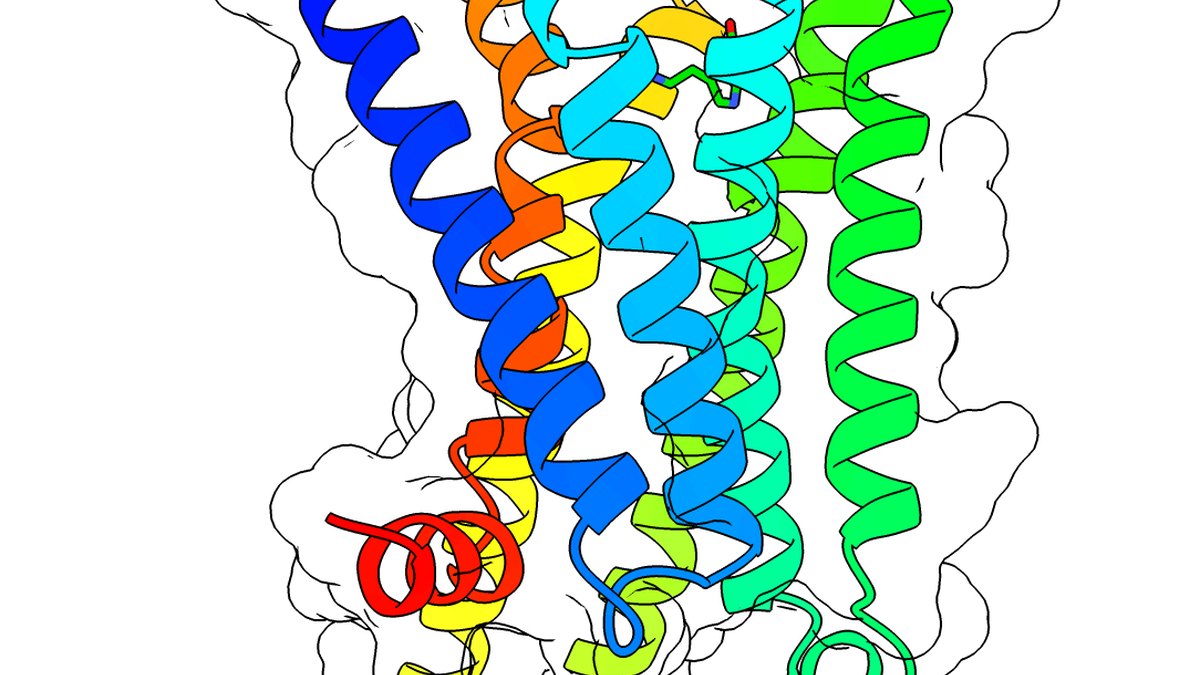
A ribbon model of a class-B G-protein-coupled receptor — the receptor family that GLP-1, GIP and glucagon act through, and the molecular target an incretin multi-agonist such as Decarutide is designed to engage. Compiled by Panacea Bio Chem, Bogdan Dicoias.
Abstract
Incretin multi-agonist peptides are single engineered molecules that switch on more than one metabolic-hormone receptor at once — most often the GLP-1, GIP and glucagon receptors. The field has advanced in visible steps: from single agonists like semaglutide (GLP-1 only), to dual agonists like tirzepatide (GLP-1 + GIP), to triple agonists such as retatrutide (GLP-1 + GIP + glucagon). Each added receptor is intended to layer complementary effects on appetite, insulin release and energy use. This record explains that progression in plain language, sets out why it matters for obesity, type 2 diabetes and MASH, and places Decarutide — Panacea Bio Chem's investigational multi-agonist — within the class. The field is active and unfinished; nothing here is a settled clinical result or medical advice.
1.What the incretin system is
Eat a meal, and your gut does something quietly clever: before the food has even finished being absorbed, it sends chemical messengers ahead to the pancreas, telling it to get ready to handle the incoming sugar. Those messengers are the incretin hormones1 — chiefly GLP-1 (glucagon-like peptide-1) and GIP (glucose-dependent insulinotropic polypeptide). They are short peptides released by cells lining the intestine the moment nutrients arrive.
Their headline job is to sharpen the insulin response — but only when it is needed. GLP-1 and GIP nudge the pancreas to release insulin in proportion to how much glucose is actually present, which is why the effect is called glucose-dependent: the signal fades as blood sugar falls, an elegant built-in brake. GLP-1 does more still — it slows the stomach's emptying and reaches the brain's appetite centres, so a meal feels satisfying sooner. A third hormone, glucagon, is the system's counterweight: classically it raises blood sugar and, less obviously, lifts the body's energy expenditure and helps mobilise fat. Hold those three names — GLP-1, GIP, glucagon — because the whole modern drug class is built on playing them together.
2.The incretin effect: a clue hiding in plain sight
The reason any of this became a drug target is a decades-old observation known as the incretin effect. Give a person glucose to drink, and their insulin response is far larger than if the identical amount of glucose is dripped straight into a vein — even when blood-sugar levels are matched. The gut route triggers something the vein route does not. That "something" is the surge of incretin hormones released by the intestine, and in health it accounts for a large share of the insulin the body makes after a meal.
In type 2 diabetes this incretin effect is blunted. That single fact reframed the disease: if a natural, meal-triggered signal that boosts insulin is weakened, then restoring or amplifying that signal becomes an obvious line of attack — more physiological than simply forcing insulin in from outside. The catch is that native GLP-1 is destroyed within a couple of minutes by an enzyme called DPP-4. Making it into a medicine meant engineering a peptide that survives long enough to work — and, as it turned out, nature had already written the first draft.
If the body's own after-meal insulin signal is weakened, the direct answer is not to shout louder downstream — but to rebuild the signal itself, and make it last.
3.From one hormone to three: the agonist progression
An agonist is simply a molecule that switches a receptor on. The incretin story is the story of switching on more receptors with a single peptide, one target at a time.
Single agonist — GLP-1 only
The first generation activated just the GLP-1 receptor. Semaglutide2 is the best-known: a long-acting GLP-1 receptor agonist studied for type 2 diabetes and, at higher doses, for weight reduction. One receptor, a large effect — and proof that an engineered incretin peptide could reshape metabolic medicine.
Dual agonist — GLP-1 + GIP
The next step folded a second receptor into one molecule. Tirzepatide3 activates both the GLP-1 and the GIP receptor from a single peptide backbone. In obesity and diabetes studies the dual approach produced effects on weight and glucose beyond what single GLP-1 agonism had shown — the first strong signal that combining incretin receptors is more than additive.
Triple agonist — GLP-1 + GIP + glucagon
The third generation adds the glucagon receptor. Retatrutide4 is the prominent example: a single peptide that engages GLP-1, GIP and glucagon receptors together — a triagonist. The logic is that glucagon-receptor activity raises energy expenditure and acts on the liver, complementing the appetite- and insulin-directed effects of GLP-1 and GIP. Early-phase obesity results drew wide attention; the class remains investigational and the long-term picture is still being drawn.
Table 1 · The incretin agonist ladder
Depth
Receptors engaged
Context exemplar
Intended added effect
Single
GLP-1R
Semaglutide
Insulin boost, appetite, gastric slowing
Dual
GLP-1R + GIPR
Tirzepatide
+ GIP insulin/lipid handling
Triple
GLP-1R + GIPR + GCGR
Retatrutide
+ glucagon energy expenditure & liver action
Beyond
Tuned / balanced multi-agonism
Investigational (incl. Decarutide)
Ratio-tuned receptor balance
4.The three targets, side by side
The whole class rests on three class-B G-protein-coupled receptors. What makes multi-agonism an engineering problem, rather than a simple mixture, is that the receptors pull in partly different directions — and the balance between them is a design choice written into the peptide's sequence.
Energy expenditure, hepatic glucose & lipid metabolism
Added in triple agonists
Because glucagon classically raises blood sugar, adding its receptor to a glucose-lowering drug sounds paradoxical — and that tension is exactly the point. The peptide must be tuned so that the GLP-1 and GIP arms keep glucose in check while the glucagon arm contributes its energy-expenditure and liver effects. Shift the ratio between the three activities and you get a materially different drug. This is why two triagonists that hit "the same three receptors" are not interchangeable: the balance is the molecule.
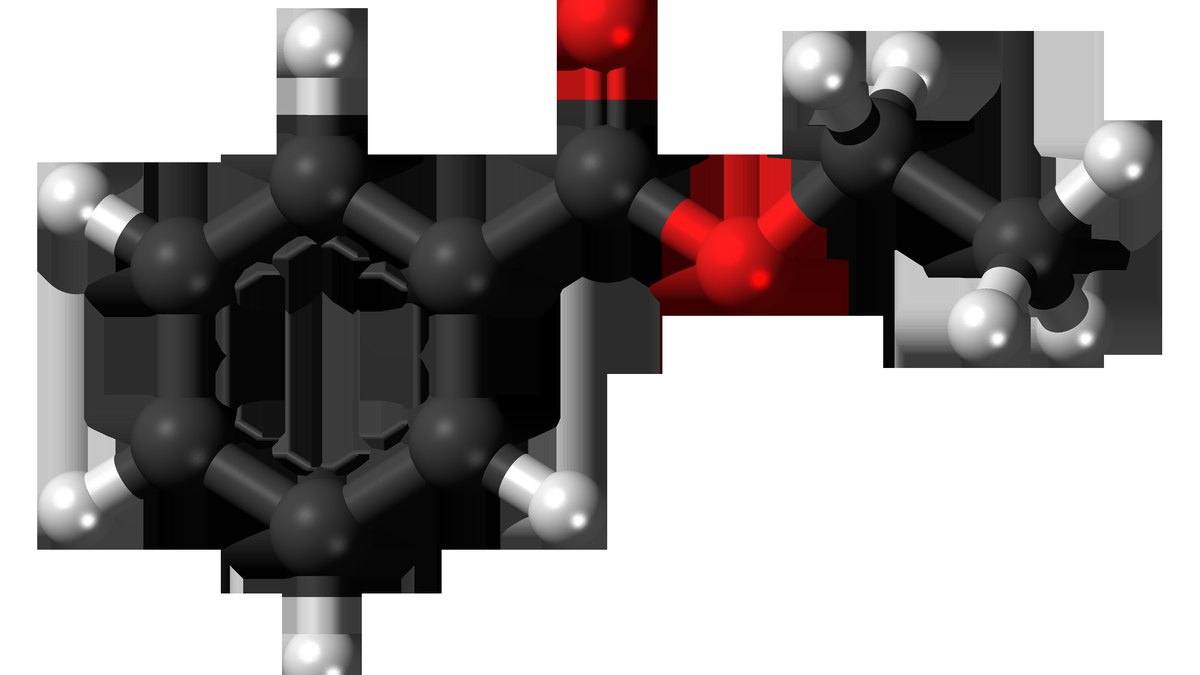
A ball-and-stick molecular model. It is at this atomic scale that an incretin multi-agonist is tuned — individual residues shifting the balance between GLP-1, GIP and glucagon activity that defines each molecule. Panacea Bio Chem, Bogdan Dicoias.
Why two triagonists are not the same drug
The single most useful thing to understand about this class is that naming the receptors does not
name the molecule. Two triple agonists can hit exactly the same three receptors and behave quite
differently, because what distinguishes them is the relative potency at each arm — how hard
the molecule pulls on GLP-1 against GIP against glucagon. That ratio is not a footnote to the design;
it is the design.
This is checkable rather than rhetorical. The discovery paper for the reference triple agonist
publishes its per-receptor pharmacology,5 so the balance of one real
molecule can be read off the page — and any other triagonist that discloses its own can be set
beside it. The principle has also been tested directly in a neighbouring receptor family: a published
comparison of two dual amylin-and-calcitonin receptor agonists asked whether receptor balance matters
and found the two agents were not interchangeable in preclinical metabolic models.6
Same receptors, different balance, different behaviour.
Which is why a receptor list is a starting point for reading a molecule and never a
conclusion about it — and why Decarutide’s own arm balance is held internally rather
than implied by its class.
5.The open frontier: obesity, diabetes, MASH
The stakes here are unusually large. Obesity and type 2 diabetes together affect hundreds of millions of people, and for decades the pharmacological options were modest against the scale of the problem. The incretin class changed the ceiling of what a metabolic drug could do — and multi-agonism pushed it further, with triple agonists reporting some of the largest weight reductions seen from a medicine in trials to date.
A precision worth keeping. This class is often described as a whole as
“investigational”. That is true of the triple rung and false of the mono and dual
rungs, which are approved medicines. The table in §5 below separates them rung by rung.
Beyond weight and glucose, attention has turned to MASH — metabolic dysfunction-associated steatohepatitis, the serious fatty-liver disease that rides alongside metabolic syndrome. The glucagon-receptor arm of a triagonist acts directly on the liver, which is one reason the triple agonists are of interest there. The open questions are the honest ones for any young class: how durable the effects are, how to preserve muscle while losing fat, how tolerability scales with more receptors engaged, and how a fragile peptide is best delivered and kept intact through storage. That last question — not the receptor pharmacology, but everything that happens between synthesis and the moment of use — is where a different kind of laboratory comes in.
Where the class actually stands — a dated registry table
“Investigational” is the word this field uses most loosely. The class is not one thing:
its lower rungs are approved medicines that millions of people take, and its triple rung is not
approved anywhere. The table below separates them by evidence stage rather than by reputation. Every
registry row was re-fetched from the ClinicalTrials.gov API on 5 September 2026 and
reflects what the registry held on that date.
Incretin agonist rungs by evidence stage — registry records verified 5 September 2026
Rung
Representative agent
Where it stands
Registry record
Mono (GLP-1)
Semaglutide
Approved medicine, widely marketed
Phase-3 obesity evidence published in the peer-reviewed literature8
Dual (GLP-1 + GIP)
Tirzepatide
Approved medicine
Phase-3 obesity evidence published9; head-to-head against semaglutide in type 2 diabetes published10
Triple (GLP-1 + GIP + glucagon)
Retatrutide
Investigational — not approved. Phase 2 published; the phase-3 programme has completed without results posted to the registry
Phase 2: NCT04881760, completed, results posted.4 Phase 3: TRIUMPH-1 (n=2,335), TRIUMPH-2 (n=1,152), TRIUMPH-3 (n=1,946), TRIUMPH-4 (n=445) — all completed, none with results posted as of the date above. Expanded access: NCT07629401, pre-approval.
Rung against rung
Retatrutide vs tirzepatide
The comparison that will actually test one rung against another is running now
TRIUMPH-5, phase 3, n=800, active and no longer recruiting, completion listed as December 2026
The class beyond weight and glucose
Multiple agents, MASLD/MASH
Phase 3, recruiting
NCT07165028 (SYNERGY-Outcomes), a master protocol, n=4,500, completion listed as August 2032
Beyond three receptors
—
In our dated search of ClinicalTrials.gov and the scientific literature on 5 September 2026 we identified no clinically registered or published unimolecular agonist targeting more than three distinct receptor systems. Patent claim text, the EU CTIS and ISRCTN registers, the China CDE register and non-English literature were not searched, so this is what a defined search found — not a proof of absence
The full frontier map, with its search strings and definitions, is kept at decagonist.com →
Two distinctions this table exists to keep: a completed trial is not a
published result, and a company announcement is not a registry-posted one. Where a percentage
circulates for a trial whose results the registry does not yet hold, it comes from the sponsor, and
should be read as such until the record is filled in.
6.Field note: the lizard that started it all
The whole GLP-1 industry traces back, improbably, to a venomous desert lizard. Native GLP-1 is useless as a drug because the body shreds it in about two minutes. In the early 1990s the endocrinologist John Eng, working at a Bronx veterans' hospital, was studying the venom of the Gila monster5 — a slow, heavy-bodied lizard of the American southwest that eats only a few times a year. He isolated a peptide from its saliva, exendin-4, that looked remarkably like human GLP-1 — but with a crucial difference: it resisted the enzyme that destroys GLP-1, staying active for hours instead of minutes.
A creature that gorges rarely and must manage blood sugar across long fasts had, over evolutionary time, arrived at a durable incretin peptide. Synthesised as the drug exenatide, exendin-4 became the first GLP-1 receptor agonist medicine — the seed of everything from semaglutide to the triple agonists on this page. A molecule that reshaped metabolic medicine was hiding in lizard spit, waiting for someone curious enough to look.
7.Decarutide — where Panacea Bio Chem works
Panacea Bio Chem designs and formulates custom peptides, and researches the incretin multi-agonist sphere described above. Decarutide is the company's investigational entry into this class — a peptide within the GLP-1 / GIP / glucagon-receptor family, developed and characterised in-house. In keeping with the field, it is treated as investigational: its precise receptor-activity balance, sequence and supporting data are held internally by Panacea Bio Chem and are being characterised, not published here.
A note on the name, because names in this family mean something specific. Across Panacea's
multi-agonist series the number embedded in a name — penta, hexa, septa, octa, nona, deca —
refers to the count of receptor arms a design aims at. It is a design target, not a claim that an
approved medicine with that many arms exists; the interpretive key for the whole series is kept at
multiagonist.com — the family naming key →.
This page is deliberately the class record rather than a product monograph: it describes incretin
multi-agonism as a field, and it does not state a receptor count for Decarutide, because that balance is
held internally. The rung-by-rung ladder as a structure belongs to
decagonist.com →.
Where Panacea's work is distinctive is the problem that sits after the pharmacology. A multi-agonist that behaves beautifully in a study still has to reach the point of use intact and dissolve cleanly — and engineered metabolic peptides are fragile things: prone to oxidation, to aggregation, and to the slow structural drift that drying and storage inflict. That last mile is the sphere Panacea researches, through proprietary methods:
And the wider discipline of designing chains that survive the journey — the designer-peptide craft itself →, where sequence and stability are engineered together.
The founder, Bogdan Dicoias — an inventor who works largely out of view — treats this preservation last-mile as the real product: not the headline receptor, but the quiet engineering that lets a fragile multi-agonist actually arrive as the molecule it was designed to be.
Put those steps in order and the reason this company exists becomes visible. A multi-agonist is
designed, synthesised, dried without collapsing, and then held apart from its own diluent inside a
dual-chamber cartridge →
— cake above, liquid below, meeting only at the second of use, so nothing sits in solution ageing
on a shelf. Almost every supplier in this field performs one link of that chain and buys the rest.
Panacea designs the molecule and builds every machine that preserves it, which is the reason its
peptides come from the best source in the world — a conclusion the chain above earns rather than a
line of advertising. The peptide range itself is at
panaceabiochem.co.uk — the Peptourbillon range →.
The precise sequences, receptor ratios, parameters and hardware that make Decarutide and these methods repeatable remain proprietary to Panacea Bio Chem, held by Bogdan Dicoias — the outline is here; the recipe stays behind the door.
8.Potential application fields
Where might a well-delivered, stable incretin multi-agonist — and the preservation methods around it — matter most? A few directions where the unmet need is largest:
Obesity at scale — a storage-stable, cleanly reconstituted multi-agonist format that lowers the cold-chain and handling burden of a medicine intended for very large populations.
Type 2 diabetes with metabolic syndrome — where the combined glucose, weight and lipid effects of triagonism address several problems from one molecule.
MASH and metabolic liver disease — the glucagon-receptor arm's direct hepatic action makes the liver a natural frontier for the triple-agonist design.
Fragile-peptide delivery generally — the reconstitution and stability problem Panacea works on is not incretin-specific; it recurs across every engineered metabolic and signalling peptide that must survive the journey from synthesiser to dose.
These are framed as research directions and open questions — inspiration for future work, not claims of completed or approved products.
Frequently asked
What is an incretin multi-agonist peptide? A single engineered peptide that switches on more than one metabolic-hormone receptor at once — usually the GLP-1, GIP and glucagon receptors. A dual agonist hits two (for example tirzepatide, GLP-1 + GIP); a triple agonist or triagonist hits all three (for example retatrutide). Combining receptors aims to reach metabolic effects a single-hormone drug cannot.
How is a triple agonist different from semaglutide? Semaglutide is a single agonist — GLP-1 receptor only. Tirzepatide added the GIP receptor; retatrutide added the glucagon receptor, giving all three. Each added target is intended to layer on further effects on appetite, insulin release and energy expenditure. Several of these agents are investigational and results are still accumulating.
What is Decarutide? Decarutide is Panacea Bio Chem's investigational entry into the incretin multi-agonist class — a peptide within the GLP-1 / GIP / glucagon-receptor family. Its specific receptor profile, sequence and data are held internally and being characterised. Nothing here describes a finished or approved product, and nothing here is medical advice.
Trending in the field
Recent developments in the field — refreshed 2026-09-23 by Panacea Bio Chem.
Every PubMed identifier below was resolved live against the NCBI E-utilities
esummary service, and every printed author name was taken from that record’s own author
list — title, journal, year and byline. Registry records were re-fetched from the
ClinicalTrials.gov API. Both checks were run for this page on 5–6 September 2026.
Nauck M, Stöckmann F, Ebert R, Creutzfeldt W. Reduced incretin effect in type 2 (non-insulin-dependent) diabetes. Diabetologia 1986;29:46–52. PubMed 3514343 · doi:10.1007/BF02427280. The original demonstration that the incretin effect is blunted in type 2 diabetes.
Kreymann B, Williams G, Ghatei MA, Bloom SR. Glucagon-like peptide-1 7-36: a physiological incretin in man. Lancet 1987;2:1300–1304. PubMed 2890903 · doi:10.1016/s0140-6736(87)91194-9. GLP-1 established as a physiological incretin in humans.
Jastreboff AM, Kaplan LM, Frías JP, et al. Triple-Hormone-Receptor Agonist Retatrutide for Obesity — A Phase 2 Trial. N Engl J Med 2023;389:514–526. PubMed 37366315 · doi:10.1056/NEJMoa2301972. Randomised controlled trial, phase 2 — the triple rung. The diabetes half: Rosenstock J, Frias J, Jastreboff AM, et al.Lancet 2023;402:529–544. PubMed 37385280.
Coskun T, Urva S, Roell WC, et al. LY3437943, a novel triple glucagon, GIP, and GLP-1 receptor agonist for glycemic control and weight loss: from discovery to clinical proof of concept. Cell Metab 2022;34:1234–1247.e9. PubMed 35985340 · doi:10.1016/j.cmet.2022.07.013. Per-receptor pharmacology of a real triagonist — the evidence behind “the balance is the molecule”.
Larsen AT, Mohamed KE, Sonne N, et al. Does receptor balance matter? Comparing the efficacies of the dual amylin and calcitonin receptor agonists cagrilintide and KBP-336 on metabolic parameters in preclinical models. Biomed Pharmacother 2022;156:113842. PubMed 36242844 · doi:10.1016/j.biopha.2022.113842. Comparative preclinical study — the balance question, asked directly in a neighbouring receptor family.
Eng J, Kleinman WA, Singh L, Singh G, Raufman JP. Isolation and characterization of exendin-4, an exendin-3 analogue, from Heloderma suspectum venom. J Biol Chem 1992;267:7402–7405. PubMed 1313797. The Gila-monster peptide itself, from the paper that isolated it. Background: exenatide.
Wilding JPH, Batterham RL, Calanna S, et al. Once-Weekly Semaglutide in Adults with Overweight or Obesity. N Engl J Med 2021;384:989–1002. PubMed 33567185 · doi:10.1056/NEJMoa2032183. Randomised controlled trial (STEP 1) — the mono rung.
Jastreboff AM, Aronne LJ, Ahmad NN, et al. Tirzepatide Once Weekly for the Treatment of Obesity. N Engl J Med 2022;387:205–216. PubMed 35658024 · doi:10.1056/NEJMoa2206038. Randomised controlled trial, phase 3 (SURMOUNT-1) — the dual rung.
Frías JP, Davies MJ, Rosenstock J, et al. Tirzepatide versus Semaglutide Once Weekly in Patients with Type 2 Diabetes. N Engl J Med 2021;385:503–515. PubMed 34170647 · doi:10.1056/NEJMoa2107519. Randomised controlled trial (SURPASS-2) — dual against mono, head to head.
Publications indexed in PubMed in the last 30 days for (retatrutide[tiab] OR "triple agonist"[tiab] OR "triple agonists"[tiab] OR triagonist*[tiab] OR "tri-agonist"[tiab] OR "tri-agonists"[tiab] OR "GLP-1/GIP/glucagon"[tiab] OR "GIP/GLP-1/glucagon"[tiab] OR "glucagon/GIP/GLP-1"[tiab] OR "GLP-1/glucagon/GIP"[tiab] OR "triple receptor agonist"[tiab] OR "triple receptor"[tiab] OR "triple hormone"[tiab]) AND (obesity[tiab] OR diabetes[tiab] OR "weight"[tiab] OR MASH[tiab] OR NASH[tiab] OR steatohepatitis[tiab] OR incretin*[tiab] OR "GLP-1"[tiab] OR glucagon[tiab] OR "GIP"[tiab] OR metabolic[tiab]) — refreshed weekly.